Trust in the Leader of Collaborative Process Design and Facilitation
TOOL T-04 | Diagnostic | Module 1: Pre-Engagement Diagnostics
Project Stage Risk Profiler
WHEN TO USE At project initiation and at each major phase transition.
How to Use It
1. For the current project stage, review the standard SE-GRM risk typology: expectation and information risks; exclusion and representation risks; coordination and alignment risks; grievance intake and response risks; system fragility and transition risks.
2. Rate each risk type: High (likely in current stage), Medium (possible), Low (unlikely).
3. For each High-rated risk, identify: the most likely trigger, the most affected stakeholder group, and the primary prevention or mitigation action.
4. Identify which existing SE-GRM tools and protocols are in place, and which are missing for the current risk profile.
5. Brief the engagement team on the risk profile at the start of each project stage.
6. Review and update at each phase transition.
Purpose
To identify which SE-GRM risks are most likely at each project stage and to use this profile to adapt engagement approaches, staffing, and monitoring accordingly. Risk type changes across stages: early phases carry uncertainty and expectation risks; construction phases carry coordination and livelihood disruption risks; operations phases carry system fragility risks.
Field Rationale
SE-GRM systems designed at pre-development were not updated as the project moved into construction. Risks that were low in early stages (contractor behavior, visible site activity, service disruption) became high during construction but were not anticipated in the engagement plan.

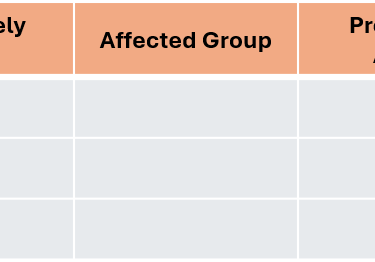
Fillable Template: Stage Risk Profile
Guidance Notes
! Field Note — The most dangerous risk transitions are those not anticipated. The construction-to-operations transition is particularly high risk: teams change, formal engagement activities end, but the community relationship continues. Plan for this transition explicitly.
Adaptation Guidance
For novel technology types (floating solar, offshore wind), add a specific risk category for regulatory gap and governance gap risks, situations where communities have concerns but no clear institutional pathway to raise them.
This website shared to the public for free courtesy of the
THE CONFLICT RESOLUTION GROUP FOUNDATION, INC.
www.coregroup.org.ph * info@coregroup.org.ph
through our SustainABILITIES Lab Project
All rights reserved. The Conflict Resolution Group Foundation 2026.
© Pixelhaze 2024. A Hostinger Website Builder Template by Pixelhaze Studio