Trust in the Leader of Collaborative Process Design and Facilitation
TOOL T-17 | Planning Guide | Module 5: Inclusion & Safe Expression
Inclusive Engagement Design Guide
WHEN TO USE Before designing any consultation event, community meeting, or engagement format.
How to Use It
1. Before designing the engagement, review the Stakeholder Map and Vulnerability Screening to identify groups with likely participation barriers.
2. For each identified group, ask: What prevents them from speaking freely in a standard consultation?
3. Design format elements that directly address each identified barrier: small-group sessions, separate sessions, accessible venues, appropriate timing.
4. Identify the appropriate facilitator for each group, someone trusted, with no authority over their livelihood.
5. Design documentation methods that do not intimidate: visual documentation, anonymous input options, informal note-taking.
6. After the event, use the Participation Quality Assessment to evaluate whether the format produced genuine engagement.
Purpose
A structured framework for designing engagement formats that actively create voice for marginalized, less vocal, or structurally excluded groups, rather than assuming that open formats are sufficient. Engagement that is technically open but practically inaccessible produces the same outcomes as exclusion.
Field Rationale
Standard consultation formats (barangay hall meetings with officials present, formal agenda, one-way information delivery) consistently produced low-quality participation from women, fisherfolk, tenants, and elderly residents across the study sites. The format itself was the barrier.

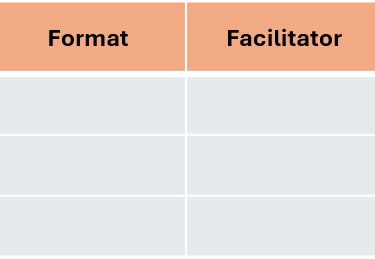
Fillable Template: Engagement Design Planning Sheet
Guidance Notes
! Field Note — The most accessible engagement format is often the least formal one: a conversation at someone's home, a discussion during a regular community activity, a walk through the affected area. Formality is a participation barrier. The format should fit the community, not the project team's convenience.
Adaptation Guidance
For communities where gender dynamics strongly limit women's participation in mixed-gender settings, plan separate women's consultations as a required component, not an optional add-on.
This website shared to the public for free courtesy of the
THE CONFLICT RESOLUTION GROUP FOUNDATION, INC.
www.coregroup.org.ph * info@coregroup.org.ph
through our SustainABILITIES Lab Project
All rights reserved. The Conflict Resolution Group Foundation 2026.
© Pixelhaze 2024. A Hostinger Website Builder Template by Pixelhaze Studio