Trust in the Leader of Collaborative Process Design and Facilitation
TOOL T-29 | Preparation Tool | Module 8: Facilitated Dialogue & Negotiation
Negotiation Preparation Guide
WHEN TO USE Before any negotiation session involving land, livelihood compensation, or other material terms.
How to Use It
1. Identify your interests: What do you actually need from this negotiation? List the two or three most important things.
2. Separate your interests from your position: Your position is what you are asking for; your interest is why you want it.
3. Identify your BATNA: What is the best outcome you can achieve if this negotiation fails?
4. Identify the other party's likely interests: What do they likely need from this negotiation?
5. Generate options: What solutions could potentially address both parties' interests?
6. Identify objective criteria: Are there external standards, precedents, or norms that could help evaluate options?
7. Plan your opening: How will you introduce your interests and invite the other party to share theirs?
Purpose
To support parties in preparing for negotiation by clarifying their interests (not just positions), identifying their BATNA (Best Alternative to a Negotiated Agreement), and developing options for resolution. Unprepared negotiation produces either capitulation or deadlock.
Field Rationale
Negotiation-type conversations occurred ad hoc without preparation. Parties entered with positions ('we want X') rather than interests ('what we need is security about Y'). Without preparation, discussions became debates, and debates do not produce durable agreements.
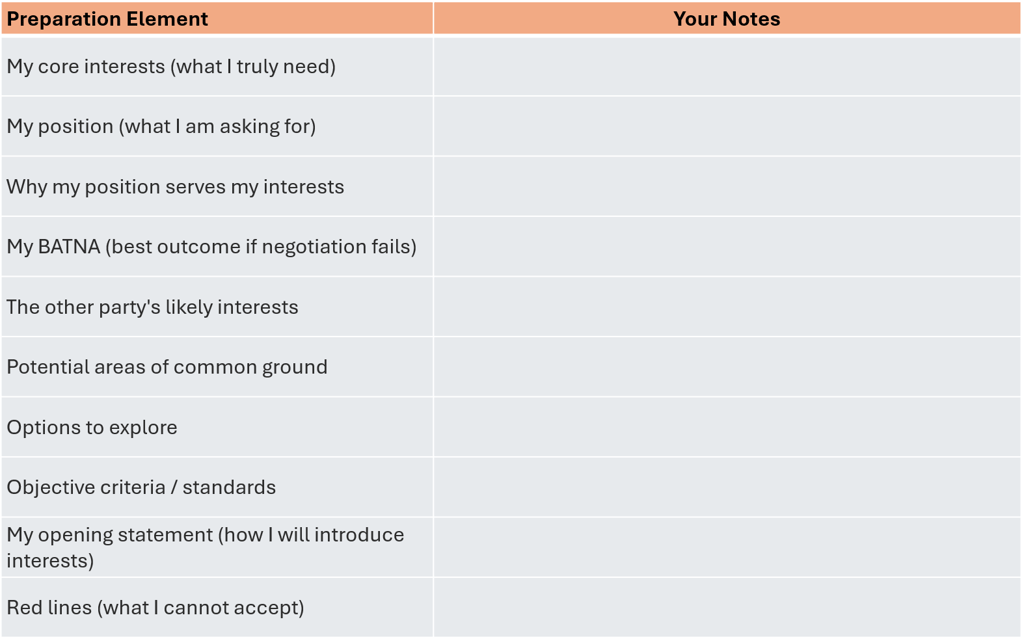
Fillable Template: Negotiation Preparation Sheet
Guidance Notes
! Field Note — The single most important question in negotiation preparation is: 'What do they actually need?' If you can answer that honestly and specifically, you can design options that address their interests alongside yours.
Adaptation Guidance
For community parties in negotiations, preparation support may be needed, someone to help them articulate their interests, understand their rights, and think through options. Consider whether a trusted CSO or legal aid organization should support community preparation.
This website shared to the public for free courtesy of the
THE CONFLICT RESOLUTION GROUP FOUNDATION, INC.
www.coregroup.org.ph * info@coregroup.org.ph
through our SustainABILITIES Lab Project
All rights reserved. The Conflict Resolution Group Foundation 2026.
© Pixelhaze 2024. A Hostinger Website Builder Template by Pixelhaze Studio