Trust in the Leader of Collaborative Process Design and Facilitation
TOOL T-28 | Process Guide | Module 8: Facilitated Dialogue & Negotiation
Facilitated Dialogue Guide
WHEN TO USE When a grievance involves competing interests requiring structured multi-stakeholder engagement; when direct one-on-one engagement is insufficient.
How to Use It
1. Confirm that all relevant parties are willing to participate in a facilitated dialogue.
2. Select a facilitator trusted by all parties and with no stake in the outcome.
3. Design the agenda: opening (ground rules), problem statement, interests exploration, option generation, agreement, documentation.
4. Brief each party separately before the session: explain the process, confirm willingness, identify procedural concerns.
5. Open the session with ground rules: respectful language, one speaker at a time, focus on interests not positions, confidentiality of process.
6. Use open questions to draw out interests: 'What is most important to you about this situation?'.
7. Document agreements in writing before the session closes, all parties confirm the record before departing.
8. Establish a follow-up mechanism: who will verify implementation, and by when?
Purpose
A structured guide for designing and facilitating multi-party dialogue sessions, including agenda design, ground rules, documentation, and follow-up. Facilitated dialogue fills the space between informal conversation (no accountability structure) and formal legal process (adversarial)..
Field Rationale
Concerns that could have been addressed through structured dialogue were escalated into disputes because no structured dialogue mechanism existed.
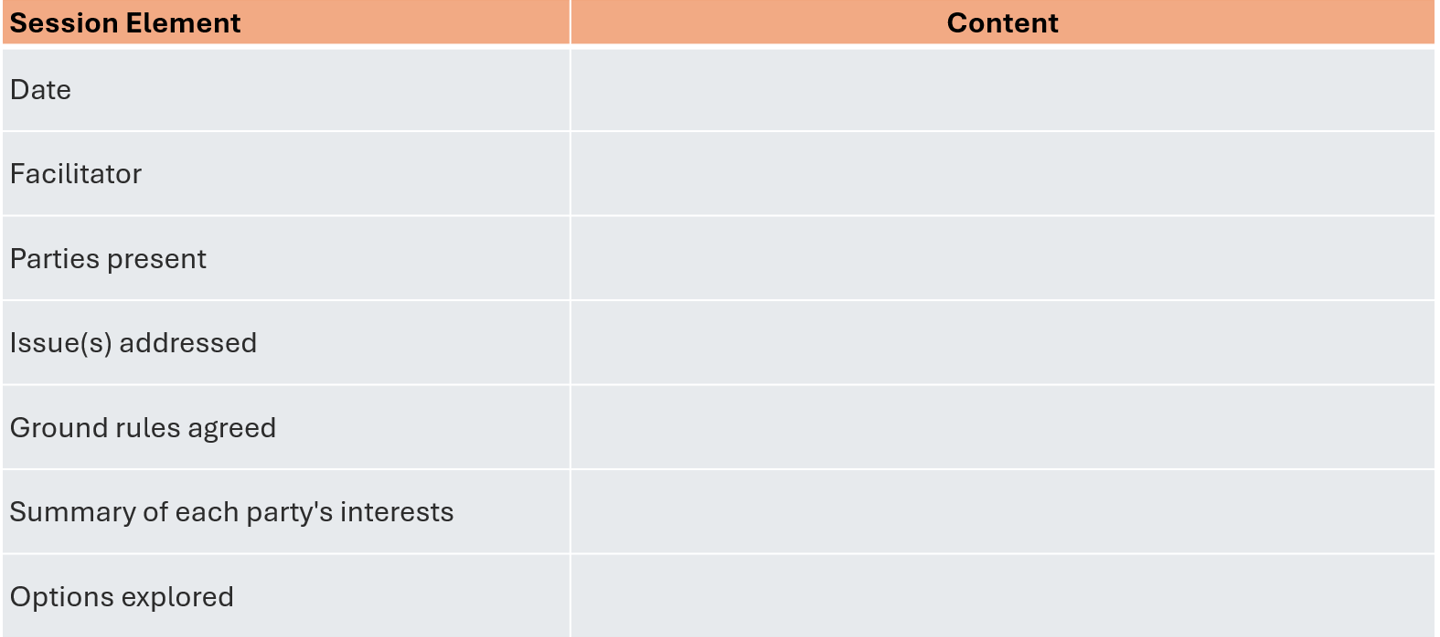
Fillable Template: Dialogue Session Record
Guidance Notes
! Field Note — Facilitated dialogue is not the same as mediation, it does not require a neutral third party trained in formal mediation. A skilled facilitator trusted by all parties can design and conduct productive dialogue. Reserve mediation for when direct dialogue has broken down or power imbalances are too severe.
Adaptation Guidance
In communities where formal meeting formats are uncomfortable, consider a walking consultation, discussing the issues while moving through the affected area. Physical presence often produces more honest dialogue than a room-based session.
This website shared to the public for free courtesy of the
THE CONFLICT RESOLUTION GROUP FOUNDATION, INC.
www.coregroup.org.ph * info@coregroup.org.ph
through our SustainABILITIES Lab Project
All rights reserved. The Conflict Resolution Group Foundation 2026.
© Pixelhaze 2024. A Hostinger Website Builder Template by Pixelhaze Studio