Trust in the Leader of Collaborative Process Design and Facilitation

TOOL T-27 | Assessment | Module 7: Conflict Assessment & Mapping
Do No Harm Assessment
WHEN TO USE Before implementing any significant response to an escalated concern, conflict intervention, or engagement activity in a high-tension context.
How to Use It
1. Describe the proposed response or intervention specifically.
2. For each potential harm category, assess the likelihood and severity.
3. If significant risks are identified, revise the intervention before implementation.
4. Document the assessment and attach to the response plan.
Purpose
To identify how proposed responses or interventions may inadvertently worsen conflict dynamics, harm vulnerable groups, or create new tensions, before implementation. Interventions designed with good intent can have harmful unintended effects if conflict dynamics are not analyzed first.
Field Rationale
In some contexts, well-intentioned interventions (bringing opposing parties to a joint meeting, announcing project changes publicly before all affected groups had been individually informed) inadvertently worsened dynamics.
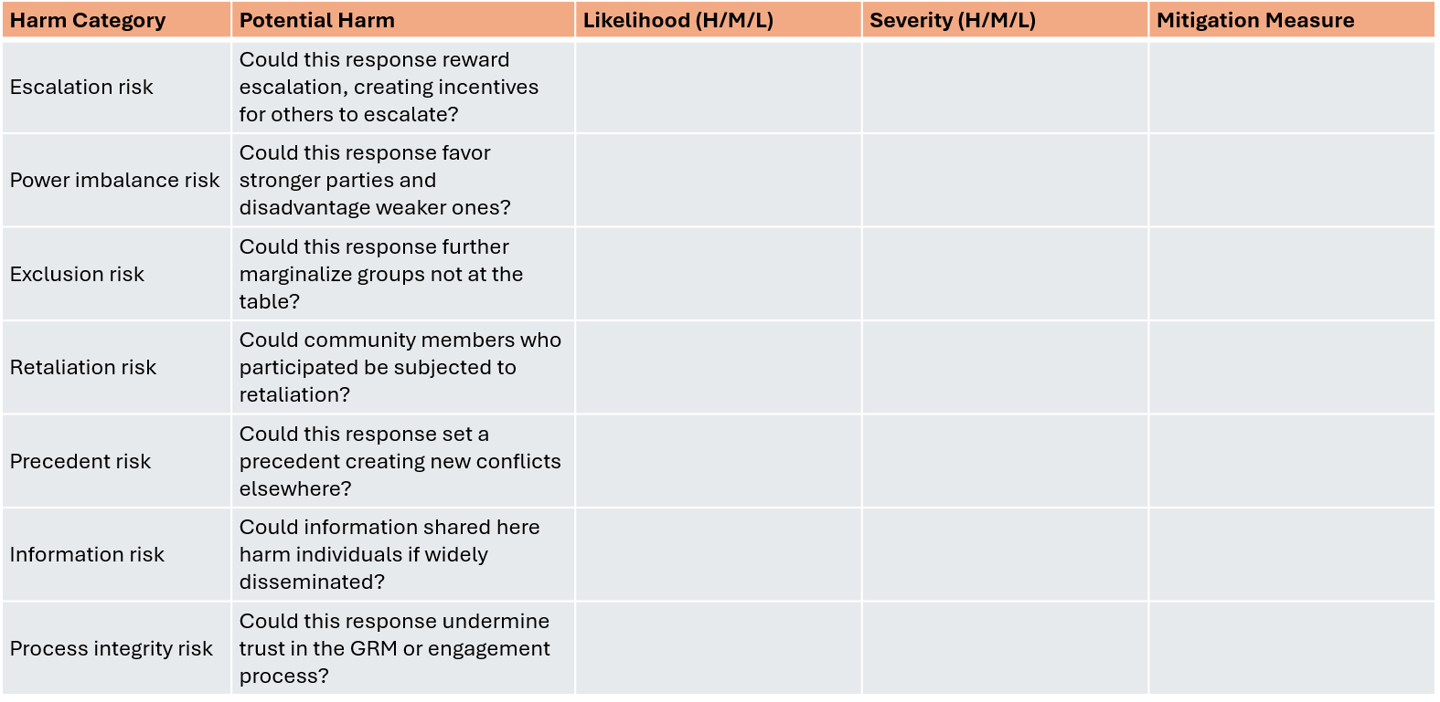
Fillable Template: Do No Harm Review
Guidance Notes
! Field Note — The Do No Harm Assessment is not a reason to delay necessary responses, it is a reason to design them carefully. The goal is not to avoid all risk but to identify and mitigate foreseeable harm before it occurs.
Adaptation Guidance
In post-conflict or politically sensitive areas, the retaliation and exclusion risk categories deserve particular attention. Community members seen as cooperating with a project in a community with active opposition may face real social or economic pressure.
This website shared to the public for free courtesy of the
THE CONFLICT RESOLUTION GROUP FOUNDATION, INC.
www.coregroup.org.ph * info@coregroup.org.ph
through our SustainABILITIES Lab Project
All rights reserved. The Conflict Resolution Group Foundation 2026.


© Pixelhaze 2024. A Hostinger Website Builder Template by Pixelhaze Studio