Trust in the Leader of Collaborative Process Design and Facilitation

TOOL T-23 | Analysis Tool | Module 6: Grievance Redress System
Grievance Trend Analysis
WHEN TO USE Monthly during development and construction; quarterly during operations; after any cluster of related concerns.
How to Use It
1. Monthly, review all entries in the Grievance Register for the past 30 days.
2. Categorize concerns by topic: land and tenure, livelihood disruption, information and communication, safety, environmental, compensation, institutional.
3. Identify any topic with three or more concerns in the review period, flag as a trend.
4. For each trend, identify the likely root cause: communication failure, policy gap, contractor behavior, structural inequality, unresolved prior grievance, or external factor.
5. Recommend a systemic response: not closing individual cases but addressing the underlying condition.
6. Share the trend report with project management and relevant LGU.
7. Track whether systemic responses are implemented and whether the trend is resolved.
Purpose
To identify patterns across grievances that point to systemic issues, rather than managing concerns only as individual cases. Recurring concerns about the same topic from the same group across the same time period are evidence of an unaddressed structural condition.
Field Rationale
Individual grievances were resolved case by case. But when the full grievance record was reviewed, patterns were visible: the same issues (land boundary, employment fairness, notification failure) recurred repeatedly in different forms and from different complainants. Without systematic trend analysis, these patterns were invisible.

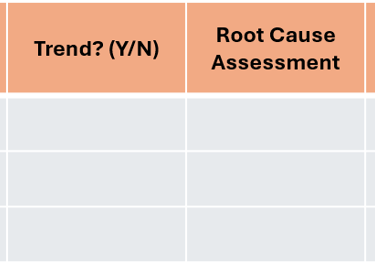
Fillable Template: Grievance Trend Report
Guidance Notes
! Field Note — Case-by-case resolution without trend analysis is the most common SE-GRM failure mode. Each individual case is 'resolved,' but the pattern continues because the underlying condition is never addressed. Trend analysis converts the grievance register from a compliance tool into a learning tool.
Adaptation Guidance
Share trend reports with the community at regular intervals. Informing communities that a pattern has been identified and a systemic response is underway builds credibility. Silence about known patterns erodes it.
This website shared to the public for free courtesy of the
THE CONFLICT RESOLUTION GROUP FOUNDATION, INC.
www.coregroup.org.ph * info@coregroup.org.ph
through our SustainABILITIES Lab Project
All rights reserved. The Conflict Resolution Group Foundation 2026.


© Pixelhaze 2024. A Hostinger Website Builder Template by Pixelhaze Studio