Trust in the Leader of Collaborative Process Design and Facilitation

TOOL T-22 | Assessment | Module 6: Grievance Redress System
Governance Gap Mapper
WHEN TO USE At project inception for novel technology types; when concerns arise that fall outside the mandate of existing institutions.
How to Use It
1. List all institutions with potential jurisdiction over the project: national agencies, LGUs, regulatory bodies, environmental agencies.
2. For each institution, identify: (a) their formal mandate, (b) whether that mandate covers this project type, and (c) their current capacity to receive and respond to community concerns.
3. Identify any concern types for which no institution has a clear mandate, these are governance gaps.
4. For each gap, identify: possible workarounds, whether the gap requires formal policy resolution, and who is responsible for raising it.
5. Document the gap map and share with the project team and relevant agencies.
6. Track whether gaps are resolved or persist as the project progresses.
Purpose
To identify where institutional mandates are unclear, overlapping, or absent for specific project types, particularly novel technologies (floating solar, offshore wind) where no established regulatory pathway exists. Governance gaps are SE-GRM risks: if no institution has a clear mandate to receive a concern, the concern has nowhere to go.
Field Rationale
Concerns about the project fell between different agencies. The agencies were not yet well-positioned to receive or respond to community concerns. This created an institutional void that communities experienced as abandonment.

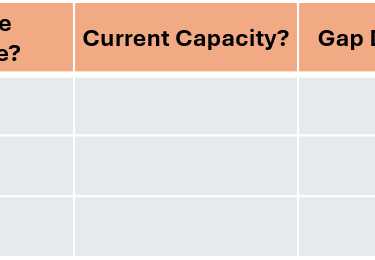
Fillable Template: Governance Gap Analysis
Guidance Notes
! Field Note — Governance gaps are not unique to novel technologies, they exist wherever institutional boundaries are unclear or multiple agencies share jurisdiction without coordination. The key question is: if a community member has a specific type of concern, which institution can actually receive it, have authority to act on it, and follow through?
Adaptation Guidance
For projects involving novel technologies, the GRM design should explicitly address governance gaps, what happens when a concern falls outside the mandate of any existing institution.
This website shared to the public for free courtesy of the
THE CONFLICT RESOLUTION GROUP FOUNDATION, INC.
www.coregroup.org.ph * info@coregroup.org.ph
through our SustainABILITIES Lab Project
All rights reserved. The Conflict Resolution Group Foundation 2026.


© Pixelhaze 2024. A Hostinger Website Builder Template by Pixelhaze Studio