Trust in the Leader of Collaborative Process Design and Facilitation
TOOL T-15 | Assessment | Module 4: Communication & Information Sharing
Information Asymmetry Audit
WHEN TO USE Before major consultation events; after any sign of widespread confusion or divergent community narratives.
How to Use It
1. Identify the key information categories that communities need: project scope and timeline, land and livelihood impacts, legal rights, grievance channels, compensation arrangements.
2. For each category, assess: (a) how information is currently being communicated, and (b) whether target community groups are likely to understand it.
3. Conduct a brief verification exercise with a small community sample: ask them to explain back what they understood about each key information category.
4. For each identified gap, specify: what accessible format would close it, who is responsible, and by when.
5. Repeat after major information events to check whether understanding improved.
Purpose
To systematically identify where technical complexity, language barriers, or selective disclosure create knowledge gaps for community stakeholders, and to improve information accessibility before consultations proceed. Communities cannot meaningfully consent to or engage with information they do not understand.
Field Rationale
Project teams believed communities were informed because formal consultations had occurred. Communities believed they did not understand key aspects of the project. The gap between what was disclosed and what was understood was structural: the format, language, and channel were not designed for the audience.

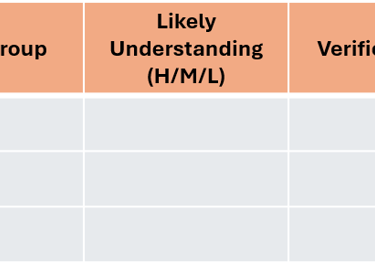
Fillable Template: Information Accessibility Assessment
Guidance Notes
! Field Note — Information asymmetry is not a communication failure, it is a structural feature of technical projects in communities with different knowledge bases. The audit helps make this visible and addressable. It should not be used to blame communities for not understanding.
Adaptation Guidance
For novel technology types (floating solar, offshore wind), information asymmetry is particularly high because communities have no prior reference for understanding the technology's impacts. Invest extra effort in accessible explanation.
This website shared to the public for free courtesy of the
THE CONFLICT RESOLUTION GROUP FOUNDATION, INC.
www.coregroup.org.ph * info@coregroup.org.ph
through our SustainABILITIES Lab Project
All rights reserved. The Conflict Resolution Group Foundation 2026.
© Pixelhaze 2024. A Hostinger Website Builder Template by Pixelhaze Studio